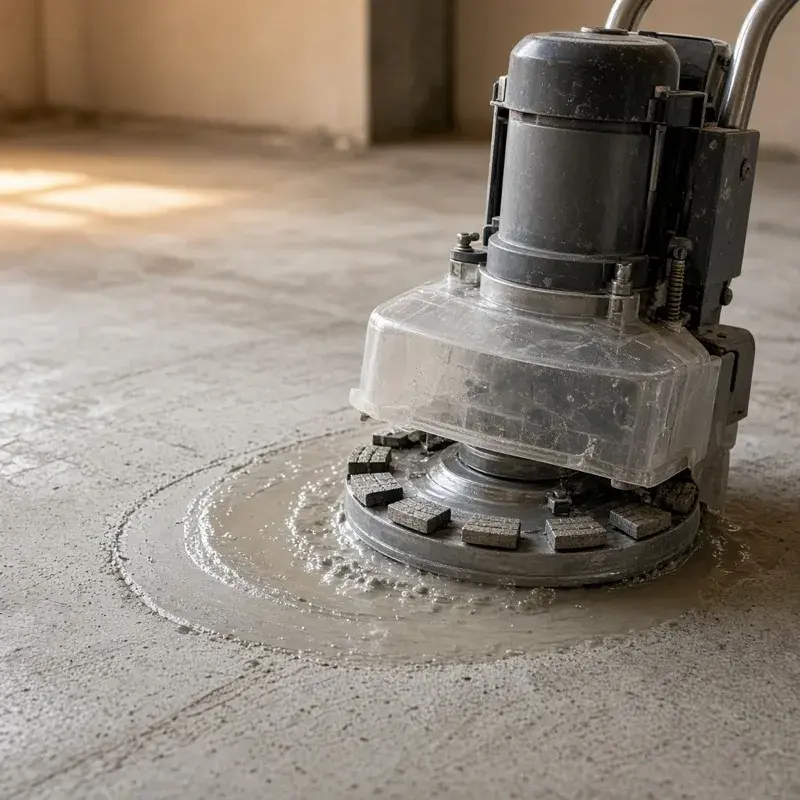
Diamond Grind
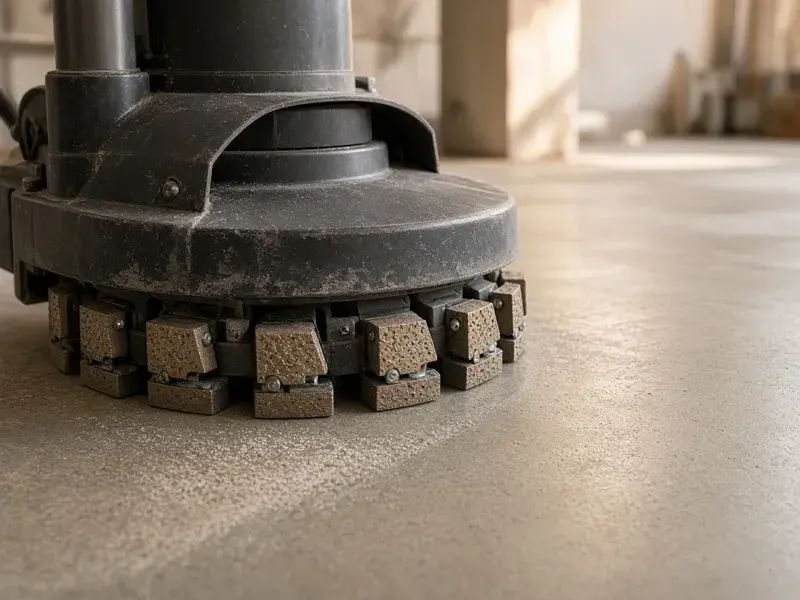
Coarse metal-bond diamonds cut through glue, old coatings, and weak surface cream.
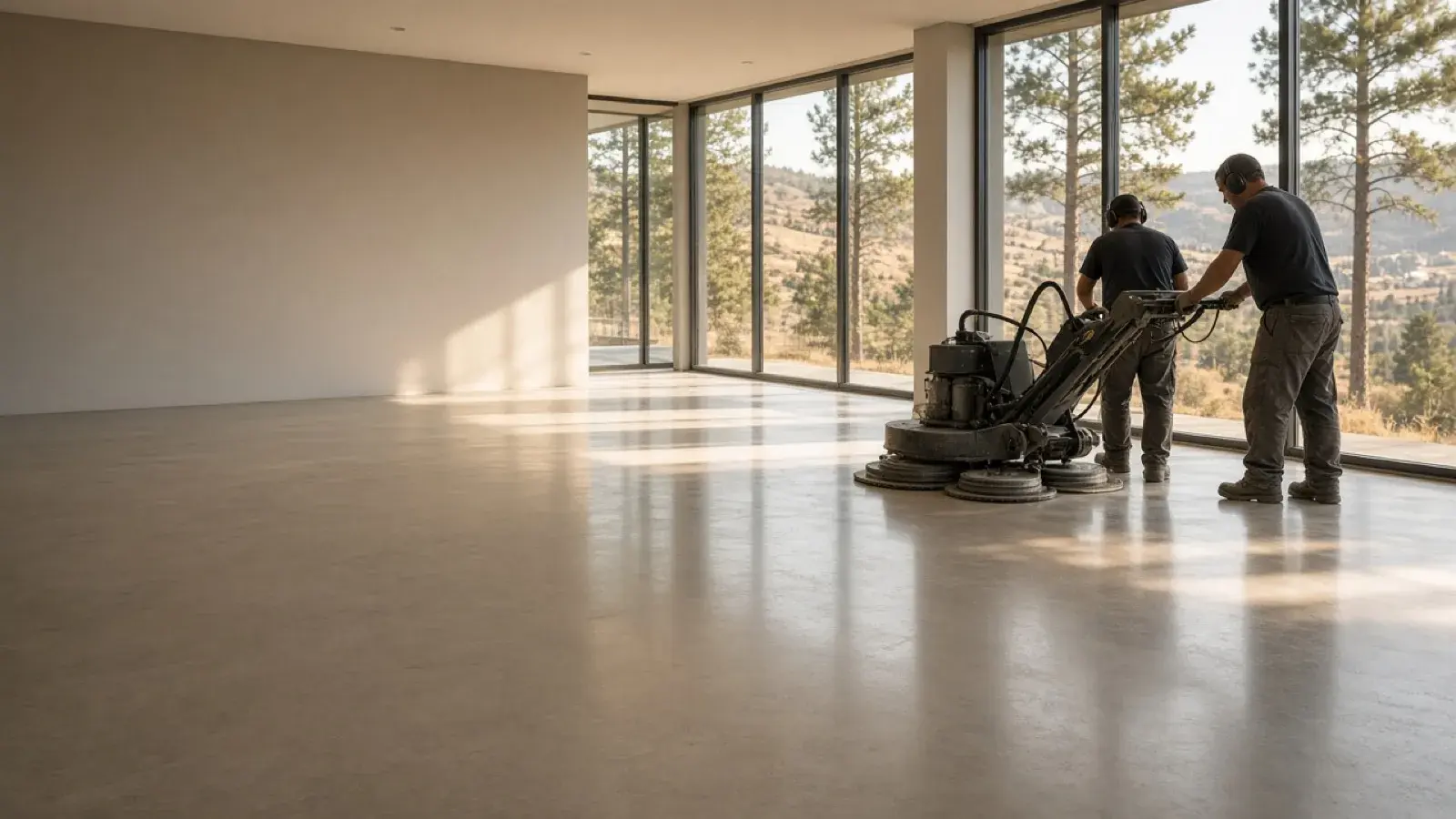
Kelowna · Okanagan
Kelowna Concrete Polishing Pros grinds, hones, and densifies concrete floors across Kelowna and the Okanagan. Garages get coatings. Shops get the dust knocked out of them. Houses get a floor that is actually the slab, not a film waiting to peel.
Serving Kelowna · West Kelowna · Vernon · Penticton · Osoyoos · Oliver
The main search is concrete polishing Kelowna. Right behind it: garage epoxy, concrete grinding, sealing a driveway before the next freeze, and commercial floors that have to stop dusting. Those are the services below, named the way you would type them.
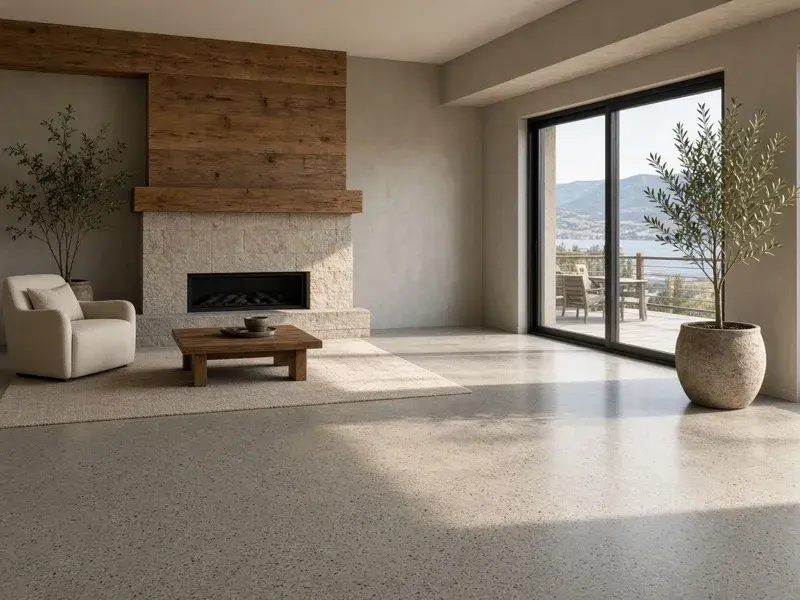
We grind, hone, and polish your concrete floors to a mirror-bright finish using industrial diamond tooling — no coatings, no wax, just the floor itself transformed.
100% solids epoxy floor systems for garages, workshops, warehouses, and commercial spaces. Built tough for Okanagan temperature swings.
Remove high spots, lippage, trip hazards, and old coatings. Flatten uneven slabs before polishing, coating, or new flooring installation.
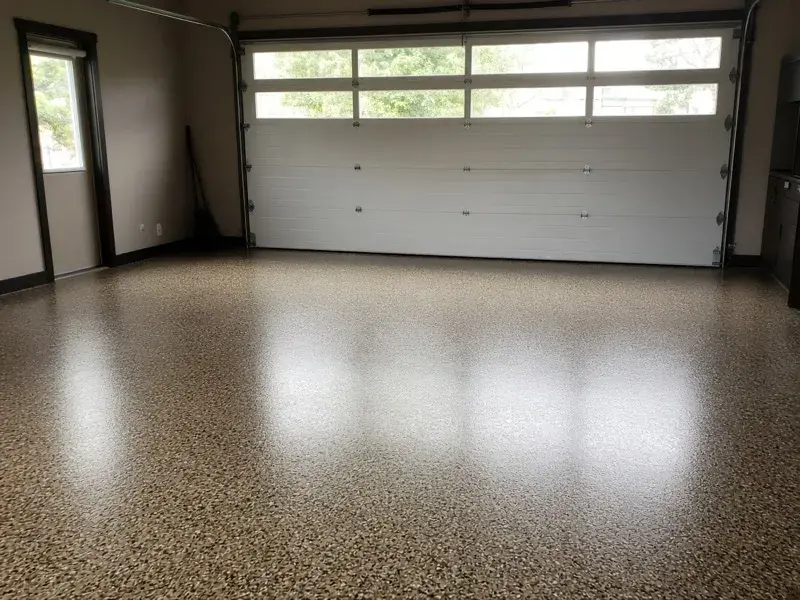
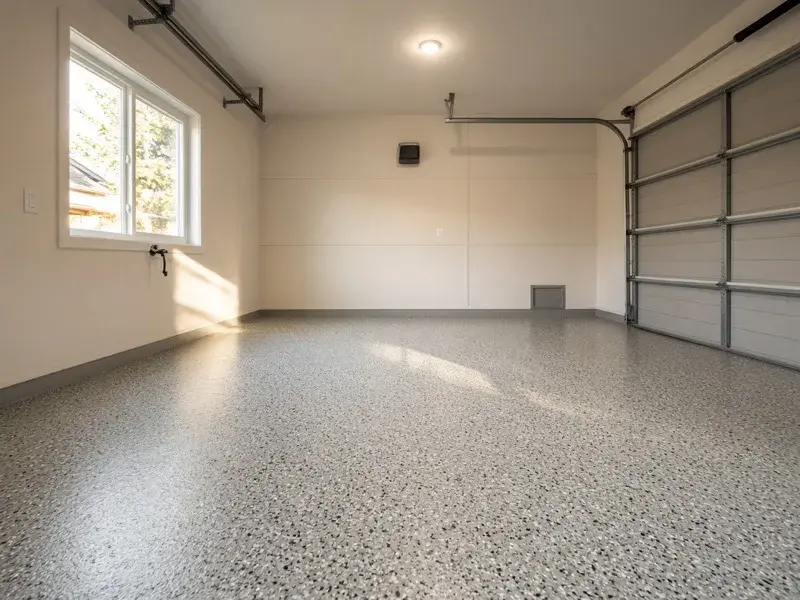
Transform a dull, stained garage slab into a durable, easy-clean surface. Flake, solid colour, and metallic systems available.
Penetrating sealers, topical film sealers, and crystalline waterproofing systems that protect your slab from moisture, freeze-thaw damage, and staining.
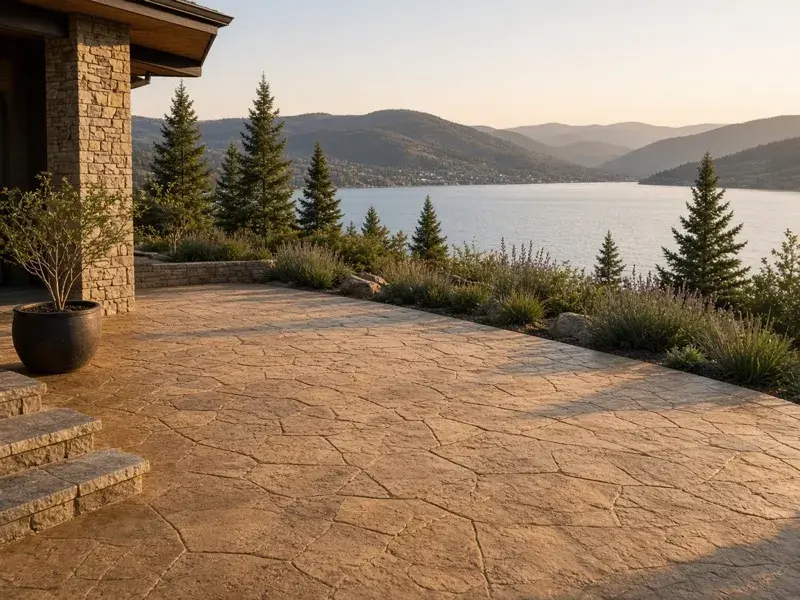
Micro-topping, spray texture, and troweled overlay systems that give old, worn, or pitted concrete a fresh decorative surface without full replacement.
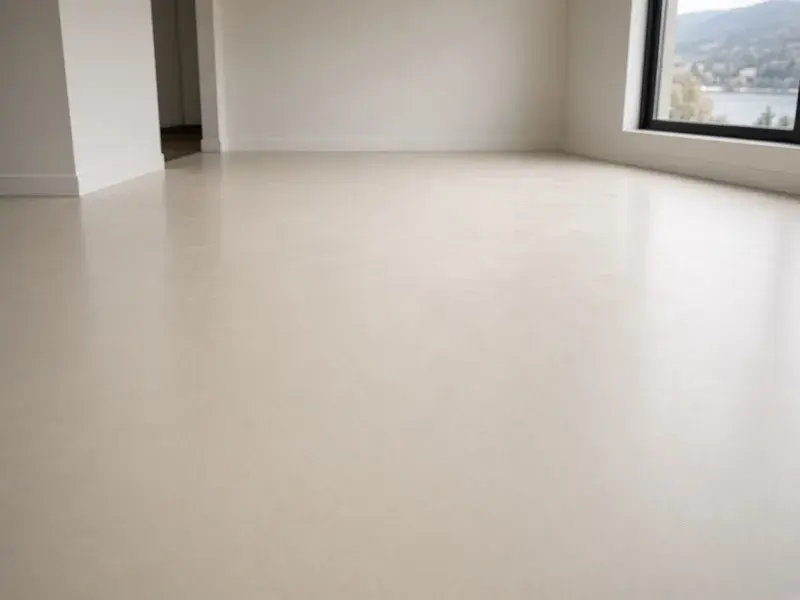
High-production polished concrete for retail stores, showrooms, restaurants, office buildings, and industrial facilities across the Okanagan Valley.
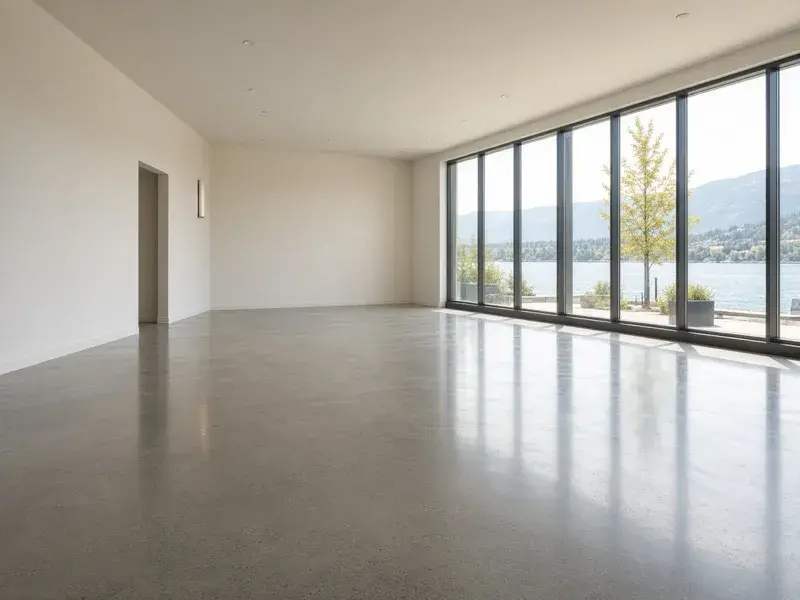
Heavy-duty diamond grinding and densification for warehouses, manufacturing facilities, food processing plants, and distribution centres requiring durable, dust-free floors.
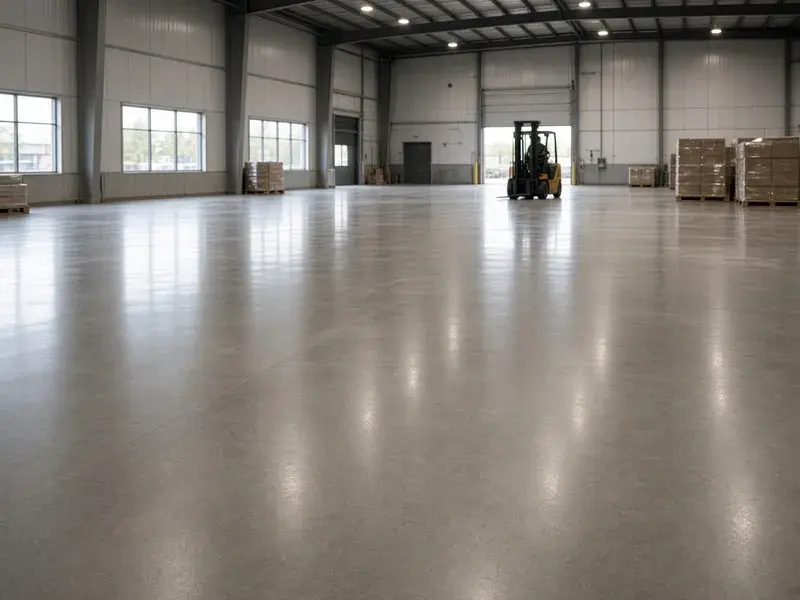
Acid stains, water-based stains, and acetone dyes transform plain grey concrete into rich, variegated colour with permanent results that won't peel or chip.
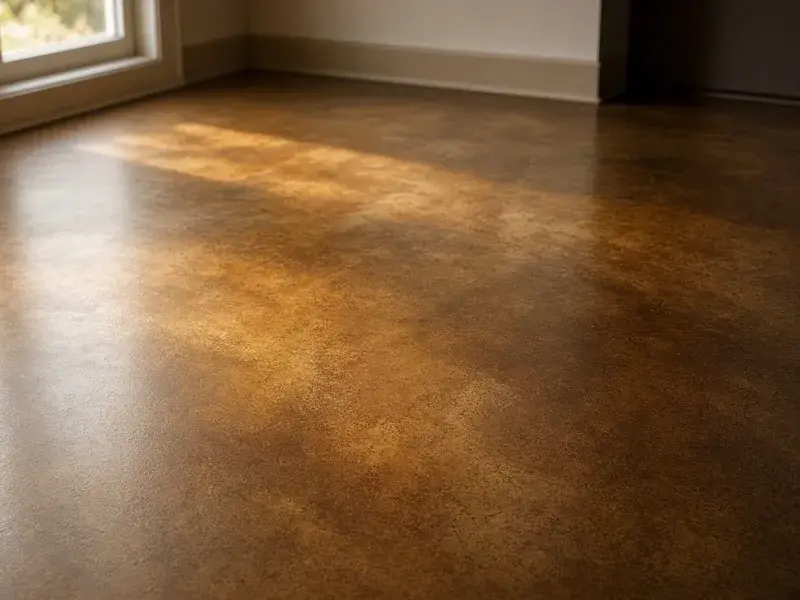
Repair pitted, spalled, or cracked concrete without full slab replacement. Resurfacing restores structural integrity and cosmetic appearance at a fraction of the cost.
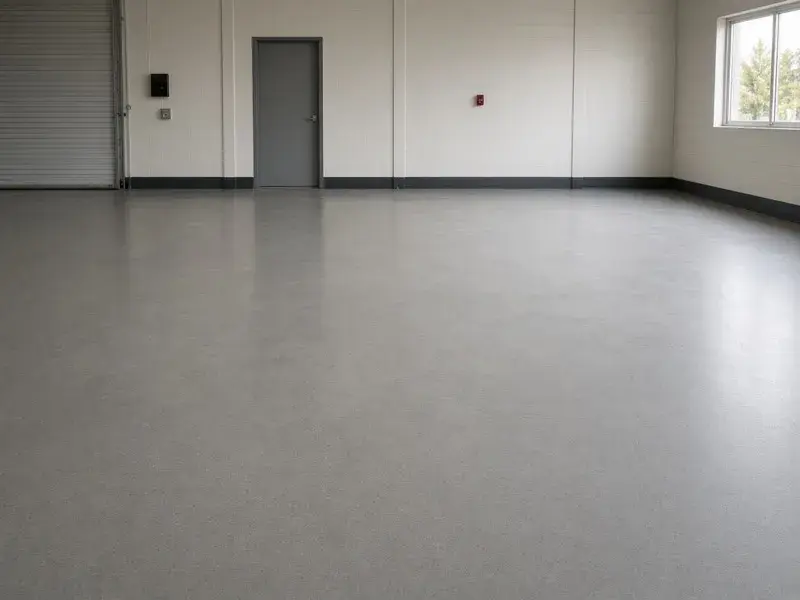
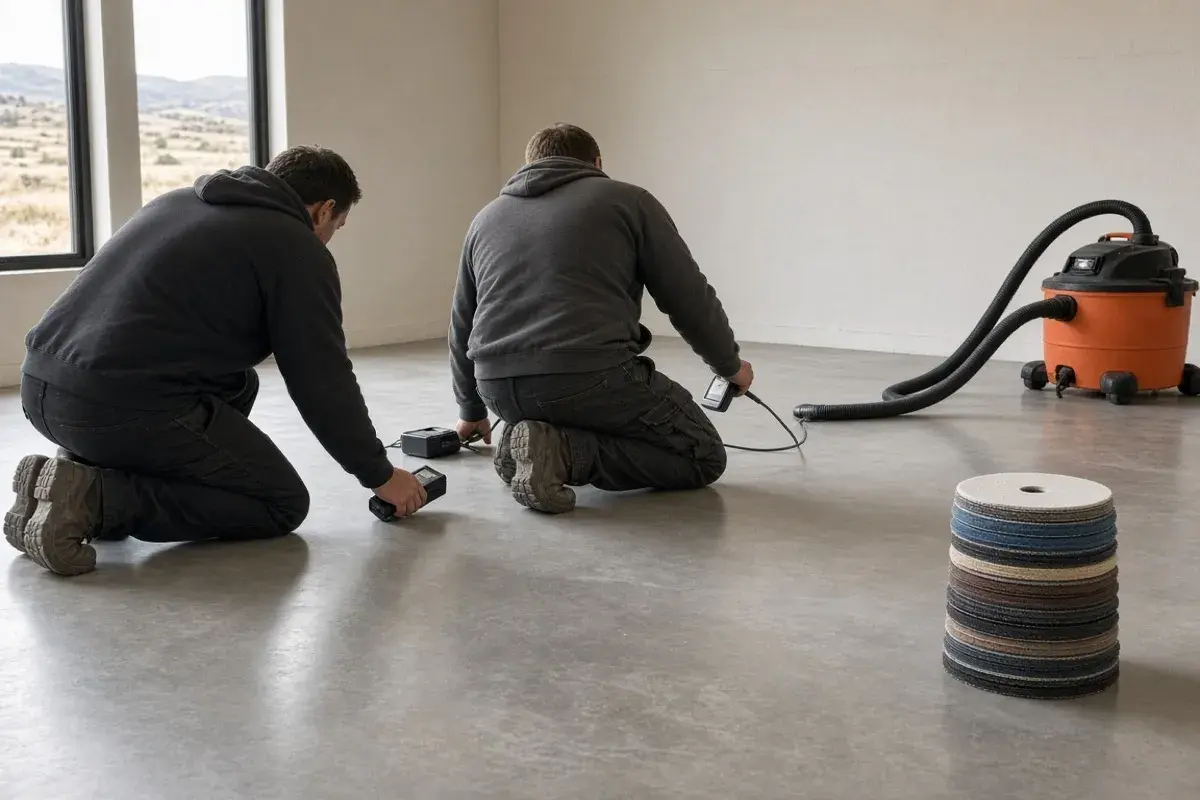
Diamond tooling, a real surface profile, a moisture check, and a grit sequence that does not skip steps. That is the work. A glossy photo is easy. A floor that still looks right after two Okanagan winters is the job we are hired for.
Coarse metal-bond diamonds cut through glue, old coatings, and weak surface cream.
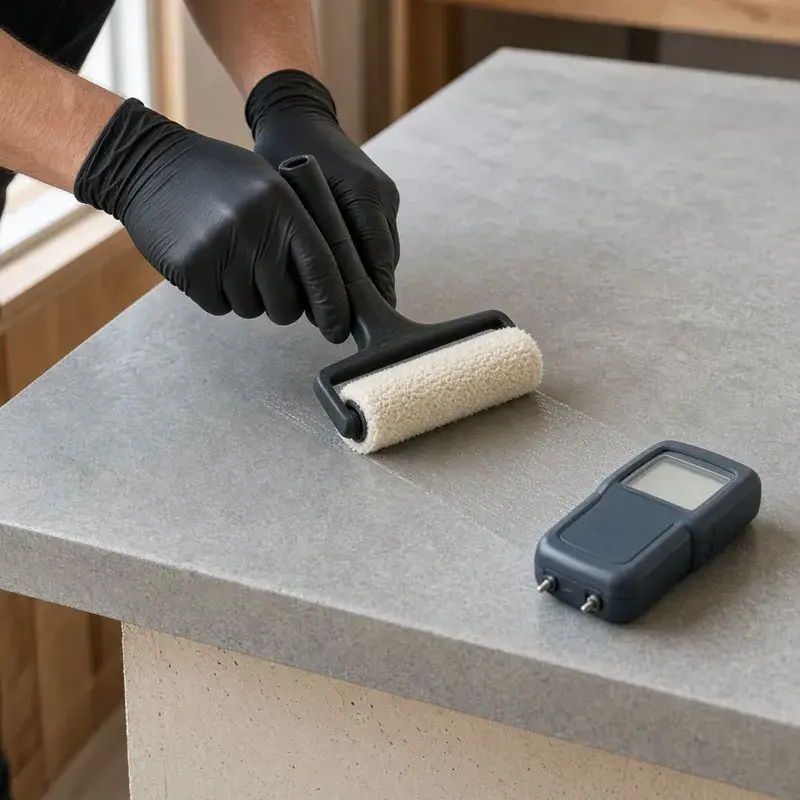
Lithium densifier soaks into the open paste and chemically hardens the slab — no more concrete dust.
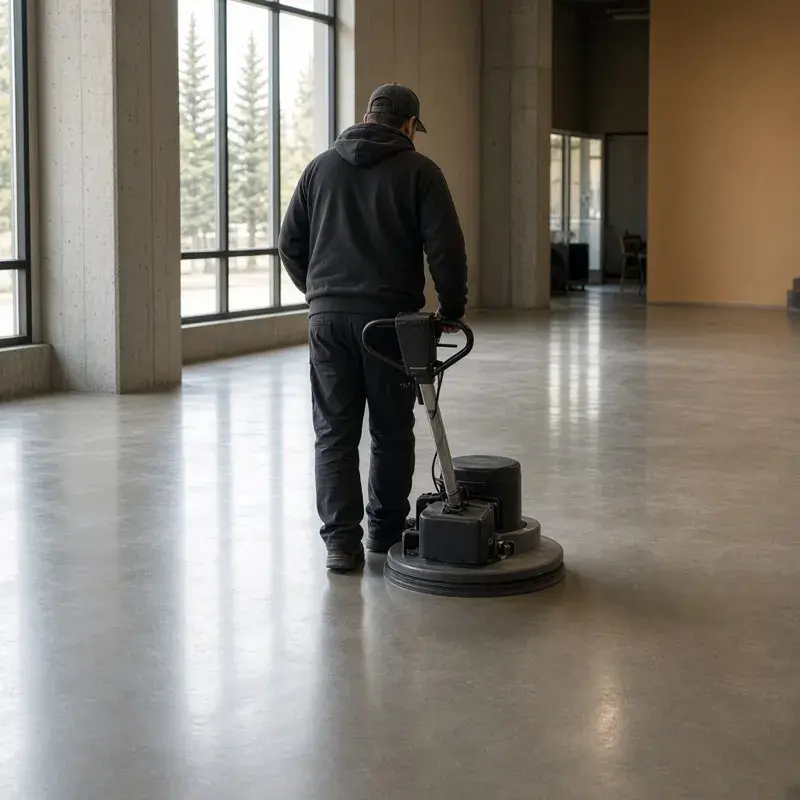
Resin pads step up through the grits. A burnish sets the exact sheen you asked for.
The long version is in our step-by-step polishing guide.
Kelowna is home base. The same crews run concrete polishing and floor coating jobs in the communities around the lake, north to Vernon, and south through Penticton, Oliver, and Osoyoos.
Every floor is a little different, but the calls follow patterns. Here are the projects that land on our schedule week after week across Kelowna and the Okanagan.
Builders and homeowners specify polished concrete on main floors, basements, and walkouts when they want a finish that does not compete with the view. We expose fine aggregate, hone to satin or a soft gloss, and detail every edge at the cabinetry line. Radiant heat is common in Kelowna new builds — we ask for the tube layout before the first diamond touches the slab.
The most common call in the valley. A 100-percent-solids epoxy base with a full flake broadcast and a UV-stable polyaspartic topcoat. It handles Okanagan road salt, hot tires, and the daily grind of an active household. We grind the slab first — no coating goes down over unscarified concrete, oil, or a smooth trowel finish.
The Okanagan wine industry asks for a lot from a floor. Production areas need a slab that does not dust into the barrel. Tasting rooms need the same concrete to look like a deliberate design choice. We zone the building: a satin hone in the public room, a densified utility finish in the tank and case storage areas.
Polished concrete in a Kelowna retail unit or restaurant is a cleaning-route decision as much as a design one. No grout lines, no vinyl seams, nothing to re-wax. A 400-grit hone handles foot traffic and mops clean in seconds. We work nights and weekends so you do not shut down for the job.
Forklift traffic eats paint and thin coatings. Diamond-ground, lithium-densified concrete does not have a film to lose. We grind, densify, and fill the joint edges that blow out under wheel loads. The result is a floor that matches the building's service life, not a recoating schedule.
A lot of Kelowna homes from the 1970s through the 2000s have a concrete slab under the flooring that the original builder never thought would be seen. We pull the adhesive residue, grind through the weak cream, and hone to a finish that reads as intentional. No height added at the door, no new threshold, no underlayment eating your ceiling clearance.
Polished concrete is a mechanical process, not a coating. Understanding the chemistry and the physics helps you know why the prep matters more than the finish pass.
Industrial diamond segments are bonded in metal or resin matrices. Metal-bond diamonds cut aggressively and are used for coarse grinding — removing old coatings, leveling lips, and opening the slab pores. Resin-bond diamonds cut finer and are used for honing and polishing. The grit sequence is not optional: each pass must remove the scratch pattern left by the coarser pass before it. Jump a grit and the scratches stay, visible forever under raking light. On Kelowna slabs, we typically start between 16 and 80 metal grit depending on what is on the floor and what the pour looked like.
Concrete naturally releases calcium hydroxide as it cures. Left alone, that free lime sits in the pore structure and slowly dusts. Lithium silicate densifier reacts with the calcium hydroxide to form calcium silicate hydrate — the same compound that gives concrete its compressive strength. The result is a chemically harder wear surface that resists abrasion and stops shedding fine particles. The densifier is applied after the coarse metal passes, when the pores are open enough to absorb it. Flooding a tight troweled slab with densifier before opening it is a waste of product.
Water vapour moves through concrete from the wet side to the dry side. In Kelowna, the gradient is usually from the soil up. A non-breathable coating — thick epoxy, polyurea, some urethanes — acts as a vapour barrier. When vapour pressure builds and cannot escape, the coating lifts. We check in-slab relative humidity before specifying any film-forming system. If the numbers are above 75 percent RH, we move to a penetrating densifier system or a moisture-tolerant primer. Polished concrete does not create a barrier so it does not blister.
A diamond grinder can remove a joint lip or a high spot of a few millimetres. It cannot correct a slab that was never struck flat, or heave from a failed subgrade. The flatness of a polished floor is the flatness of the pour. What we can improve: curled joint edges common on large warehouse panels, aggregate popouts from soft stone, trowel ridges at the bull float lap lines, and transition lips between two pours of different ages. We measure first. Promising a flat floor without knowing what the straightedge says is how someone gets an unhappy client.
Gloss level is measured in GU (gloss units) and varies from a flat matte at 200 grit to a high distinctness-of-image finish at 3000 grit and above. But the number means nothing without testing the floor under its actual light conditions. A Kelowna home with west-facing windows gets direct afternoon sun at a low angle from May through September. That raking light shows every scratch that overhead LED panels hide. We always walk the final pass with the building's real lights on and, where possible, with the west elevation lit. A floor that looks correct at noon and shows swirl marks at 4 p.m. is not done.
Acid stains are metallic salt solutions — usually iron, copper, or manganese — dissolved in a dilute hydrochloric or phosphoric acid carrier. The acid etches the paste and the metallic salt reacts with calcium hydroxide to produce insoluble mineral compounds. The colour is not a pigment sitting on top; it is a chemical reaction locked inside the concrete. That is why it cannot peel. The reaction is also why no two slabs stain identically — the calcium content, the mix design, and the curing history all affect the outcome. Acetone dyes work differently: the solvent carrier drives organic or synthetic pigment deep into the pore structure by capillary action. Colour is more predictable and the palette is wider, but the dye still needs a sealed surface to resist wear.
Both, and they are different floors. Polishing grinds and densifies the slab itself. Epoxy and garage coatings build a new layer on top. We will tell you which one fits the room after we see moisture, oil, and how the slab was finished.
Yes. Garage floor coatings are one of the most common calls we take. Most are a full flake broadcast with a polyaspartic top so the sun through the door does not amber the colour.
A high gloss can be slick when it is wet. Living areas usually stop at a satin hone. Kitchens, entries, and commercial kitchens get a texture we are willing to walk on with wet shoes. Exterior slabs get a sealer or a textured overlay, not a polish.
Call or send the form. We need to see the slab, or at least photos plus a moisture read, before a quote means anything. Oil, old glue, and vapour change the work more than the colour does.
Call Kelowna Concrete Polishing Pros or send the form. Tell us the room, the use, and what is already on the slab. We come look before we quote.